

China's got this super-rich cultural history, shaped just as much by regular folks as by emperors and scholars. If you want to get what Chinese culture is all about, check out Chinese folk art. Local people made this art, passed it down in their families, and used it every day in their lives, at festivals, and in rituals.
This blog is all about the Chinese folk art that's still kicking. It'll walk you through how China's keeping its folk stuff alive with creativity, skill, and community. Plus, it'll give you a sense of why these cultural arts matter to China now.
Chinese folk art is from the ground up, not from some fancy palace. It's all about daily life, beliefs, celebrations, and what people hope for. These art forms grew up over hundreds of years in villages and towns, usually tied to farming, weddings, holidays, and what folks believed.
It is simple but says a lot. The colors, shapes, and symbols are there to show luck, happiness, safety, and everything working together. You'll see animals, flowers, and old legends that stand for good vibes.
This art is a big piece of China's past. And today, you’ve still got artists doing their thing, which proves that old traditions and fresh ideas can totally hang together.
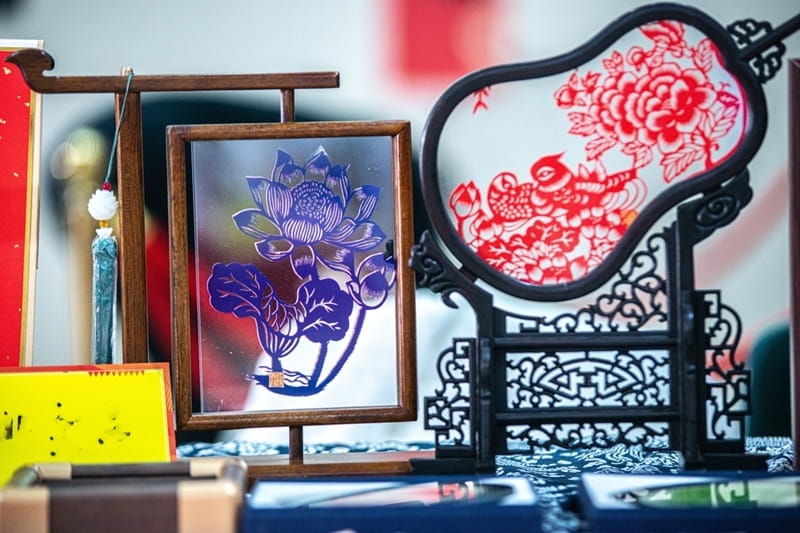
One of the best-known Chinese folk arts is paper cutting. Basically, you take red paper and cut out awesome designs with scissors or knives. These designs are usually symmetrical and packed with hidden meanings.
Paper cutting is super tight with holidays like the Lunar New Year and with weddings. Red means happiness and good luck, and the designs can mean wealth, good health, or family being together. You'll usually see flowers, birds, and the animals from the zodiac.
Even though there's a ton of new decorations, paper cutting is still cool. Families still put paper cuts on windows and doors. The fact that these age-old arts remain in everyday use throughout China can be seen by examining these old Chinese arts.
Another cool example of Chinese folk art that hasn't died out yet is shadow puppetry (also known as shadow play). Shadow puppets are considered a classic form of entertainment through the use of flat, leather, or paper puppets resembling humans or animals. The manipulation of these puppets is accomplished with the use of a (black) drapery and a light source, causing the shadows of the puppets to be visible on the front side of the drapery.
The stories presented in shadow puppetry can be based on historical events, legends, or moral lessons. The performers use music, singing, and talking to make the characters real. Back in the day, this was a super popular way to have fun in the villages.
Even today, you can catch shadow puppetry at festivals and in schools. It's key to keeping the past alive, letting young people see traditional stories in a fun way.
China's packed with cool handmade art that shows off what's around locally and what people can do. Think pottery, needlework, wooden carvings, and weaving. Every spot has its own vibe with different styles, patterns, and ways of doing things.
Back in the day, these weren't just pretty things – they were actually used around the house. Over time, these useful things became seen as real art.
Now, folks are trying to keep these crafts going with museums, workshops, and groups of artists. Keeping these folk traditions alive is super important for China to hold onto its cultural identity.
Festivals are a big deal for keeping Chinese folk art kicking. On days like Lunar New Year, the Lantern Festival, and local temple parties, you'll see folk art everywhere you look.
Think dragon dances, making lanterns, and other cool decorations – it's all part of it. These celebrations bring together folk traditions China has loved for ages, mixing art, beliefs, and getting everyone together.
When people get involved with these festivals, they're actually helping keep the culture alive. These shared times make sure the traditions stick around and don't just become something people used to do.
Cultural art isn't just about being creative; it's deeply connected to your identity, memories, and shared beliefs. For many communities, things like Chinese folk art are a way to keep their family history alive.
These days, local groups and even the government are trying to protect these arts by running training and giving props to talented artists. This helps make sure no one forgets how to do this cool stuff.
And since people all over are getting interested, this folk art is going global, which helps everyone get what China is all about.
Chinese folk art is full of symbols. Every color, shape, and picture means something. For example, fish mean you'll have plenty, and lotus flowers are all about being pure.
These symbols help explain why China does things the way it does. Art becomes a way of talking, teaching important stuff without even using words. You see these symbols in paper cutouts and puppet shows, too.
If you know what the symbols mean, you can dig into the art more and see way more than just something that looks nice.
Even though how people live now has changed, tradition is still sticking around. Many artists are merging traditional and contemporary concepts to attract the youth to the workflows of folk artists.
By attending workshops, online shops, or leading tourists on tours, artists can find multiple avenues through which they can help sustain this folk art. Thus, they also ensure that the artwork stays vital and able to be carried forward into future and/or modern societies.
Thanks to teaching and trying new stuff, Chinese folk art keeps getting better while still staying true to its roots.
The fact that this folk art is still around shows how strong cultural memory is. These art forms remind people where they came from and teach things like being patient, good skills, and working together.
Art like paper cutouts and puppet shows is more than just pretty. They tell stories, give lessons, and bring up feelings that connect what happened back then with what's happening now.
By supporting cultural art, everyone makes sure that the next generations can see how awesome tradition is, even when the world is changing fast.
China’s folk arts have not been frozen in time to become museum pieces. From paper cutting in China to shadow puppetry, from handcrafted items to festival performances, these artistic expressions are still alive. They are the result of the creativity that has been deeply influenced by life and common values.
These arts form an essential part of the cultural narrative of China, whereby, through creativity and a shared sense of purpose, different generations connect.
This folk art refers to works created by ordinary people, and they are more associated with daily life, festivals, and traditions than with the elite or court culture.
Paper cutting in China is still popular because it is an art that can be done with very basic materials, it is full of symbols, and is the main tool in celebration decoration to attract good fortune and happiness.
Shadow puppetry is being presented during festivals, schools, and cultural events as a vehicle for legend preservation.
Cultural heritage arts are a form of history, identity, and traditional knowledge preservation, thus representing the handing down of cultural values to future generations.
This content was created by AI